Université Clermont Auvergne

Université Clermont Auvergne



DIGIDEM is a three-year Erasmus+ Higher Education project designed to strengthen digital democracy, empower university students, and build a new generation of informed, ethical, and responsible digital citizens across Europe. Led by Université Clermont Auvergne (France), the project brings together universities, NGOs, and digital-innovation organizations from France, Türkiye, Portugal, Malta, Italy, and Luxembourg to co-create an advanced ecosystem for digital citizenship education.
DIGIDEM responds to a defining challenge of our time:
Young people today live, learn, communicate, and build their identities online, yet lack structured support to navigate misinformation, hate speech, algorithmic influence, online manipulation, and rapidly changing digital behaviours. The project provides higher education institutions with concrete tools to teach these topics in a practical, future-oriented, and inclusive way.
DIGIDEM aims to build a complete learning experience for higher education students, integrating:
The project does not only teach how to “use” digital tools; it focuses on how to understand, question, and act responsibly within digital environments.
A key result of DIGIDEM is the creation of NetizenSphere, an interactive online ecosystem where students and educators can:
The platform is co-designed by all partners to ensure it is engaging, pedagogically sound, and technologically robust.
DIGIDEM includes extensive research, pedagogical innovation, testing phases, and European-level cooperation. The main outputs include:
Partners conduct comparative research on how students across Europe understand online participation, misinformation, and digital risks. This informs all curriculum development.
A full curriculum with modules, activities, assessment tools, multimedia content, and educator guidelines.
It covers topics such as:
Higher education teachers receive training on how to implement the curriculum, use the platform, and address difficult digital topics confidently in their classrooms.
Students from all partner universities participate in pilot sessions, provide feedback, and help improve the learning materials.
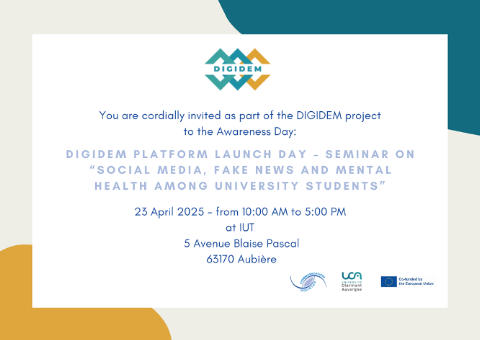
DIGIDEM organizes public events to share results with universities, policymakers, researchers, digital specialists, and youth organizations.
DIGIDEM is developed by seven organizations with complementary strengths:
Coordinator of the project, with strong expertise in media studies, digital communication, hate-speech studies, and civic engagement.
Responsible for scientific leadership and overall coordination.
Experts in digital citizenship, cyber-violence prevention, anti-radicalisation strategies, and media education.
Contributes to content creation and violence-prevention expertise.
Specializes in youth participation, digital safety, physical and digital violence prevention, and social resilience.
Brings insights from Southeast Türkiye and develops inclusive learning strategies.
Leaders in digital behaviour research, e-learning development, rehabilitation programmes, and online behaviour assessment.
Contributes to training design and digital security topics.
Experienced in community-based learning, arts education, adult education, and inclusive teaching.
Strengthens the curriculum with creative and social-engagement perspectives.
Experts in psychology, cyberbullying, AI, gender studies, and social sciences.
Supports research, digital behaviour analysis, and module development.
Specialists in digital memory, online participation, and interactive learning environments.
Supports platform development and digital engagement strategies.
DIGIDEM addresses real, urgent problems affecting students and democratic societies:
By creating a European-standard curriculum and ecosystem, DIGIDEM gives universities the tools they need to address these issues with confidence.
DIGIDEM aims to create lasting change beyond the project period. Expected long-term benefits include:
Ultimately, DIGIDEM contributes to building a safer, more ethical, and more democratic digital society across Europe.